
Robotics and Intelligent Systems · Advanced
Vision-Guided Mobile Robot
Vision-Guided Mobile Robot turns a defined need into a testable engineering concept. The proposed outcome is to use a camera to recognize markers or objects and make a local movement decision. The scope begins with requirements, operating conditions, and measurable acceptance criteria, then uses Arduino, DC motors, Distance sensors where those tools fit the evidence. Expected outputs include editable design or source files, an evaluation-ready prototype or simulation, and documented findings for the next decision. This concept can be adapted for companies according to dimensions, environment, materials, integration needs, and budget. It represents a project that can be designed and developed based on requirements, not a claim that an identical system has already been delivered.
A project that can be designed and developed based on requirements.
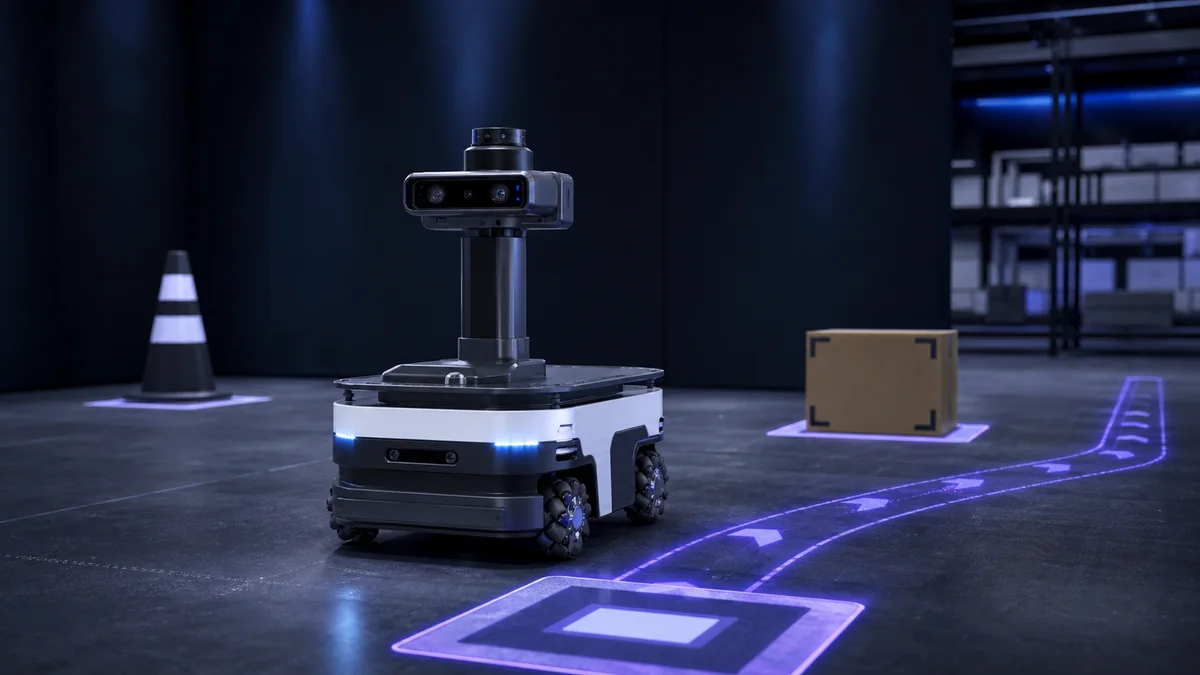
Concept and expected outcome
Use a camera to recognize markers or objects and make a local movement decision. Final architecture and components depend on dimensions, operating conditions, safety constraints, integration, budget, and the evidence required from the prototype.
Proposed scope
- A concise requirement brief for Vision-Guided Mobile Robot, including operating context and acceptance criteria.
- Editable engineering or source files plus the agreed prototype, simulation, or fabrication package.
- A bounded test that evaluates the central objective: Use a camera to recognize markers or objects and make a local movement decision.
- A short validation record covering evidence, limitations, and recommended next steps.
Suggested implementation path
- Confirm users, environment, interfaces, and constraints for Vision-Guided Mobile Robot.
- Select the smallest technical approach that can test the highest-risk assumption.
- Build and evaluate a bounded prototype against measurable criteria.
- Deliver the agreed files, test evidence, and a recommendation for iteration or production.
Information needed before work starts
Approximate dimensions, operating environment, quantities, existing files or interfaces, target budget, and acceptance criteria help define a responsible scope. Medical, safety-critical, industrial, or regulated uses require separately documented requirements, risk review, and appropriate validation before real-world use.
Request this project
Send the intended use and any available drawings, photos, or interface details so the scope can be reviewed.
Request this project